Technology is now an essential part of almost every new residential and commercial property. Internet access, Wi-Fi, security cameras, access control, smart devices, audio and video systems, telephone systems and cloud-based business tools all depend on properly planned network infrastructure.
However, network cabling is often considered too late in the construction process. Once the drywall, ceilings and interior finishes are completed, installing or changing cables can become more complicated, disruptive and expensive.
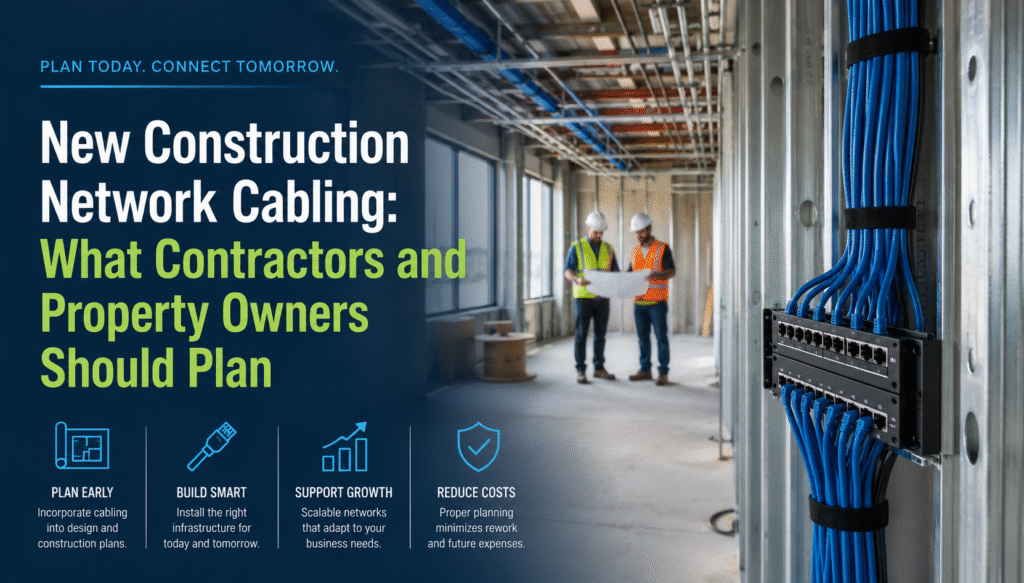
Planning network cabling early helps ensure that the property is prepared for current technology requirements and future expansion. General contractors, developers, architects and property owners should involve an experienced network infrastructure and low-voltage technology provider during the planning stage.
Blue Hawk Technologies does not provide general construction services. We work alongside contractors, developers, property managers and property owners to plan and install network infrastructure, structured cabling and connected technology systems for new construction projects.
Begin Network Planning Before Construction Is Completed
Network infrastructure should be discussed during the early design and construction stages. Ideally, the low-voltage plan should be coordinated with the architectural, electrical, security and interior design plans.
Early planning allows everyone involved in the project to determine where network connections, wireless access points, security cameras and other technology devices will be required.
Important questions to consider include:
- How will each room or area be used?
- How many people will use the network?
- Where will computers, televisions and connected devices be located?
- Will the property require security cameras or access control?
- Are smart home or building automation systems planned?
- Will conference rooms or entertainment areas require audio and video connections?
- Could the property’s technology needs increase in the future?
Answering these questions before the walls and ceilings are closed can prevent unnecessary changes later.
Identify Network Connection Locations
Each area of the property should be evaluated to determine where wired network connections may be required.
In a commercial property, network outlets may be needed in:
- Private offices
- Open workspaces
- Reception areas
- Conference rooms
- Break rooms
- Warehouses
- Retail areas
- Server or equipment rooms
- Point-of-sale locations
In a residential property, wired connections may be planned for:
- Home offices
- Bedrooms
- Living rooms
- Smart televisions
- Entertainment systems
- Security equipment
- Outdoor areas
Although Wi-Fi is convenient, wired network connections continue to provide stable and reliable performance for many devices. Computers, printers, smart televisions, security cameras, servers and conference room equipment often perform better when connected directly to the network.
Adding extra cable runs during construction can also make it easier to install new technology in the future.
Choose the Right Network Cabling
The type of cable used in a new construction project can affect network speed, reliability and long-term performance.
Cat6 cabling is widely used in residential and commercial properties because it supports many modern networking applications. Cat6a may be recommended for environments that require higher speeds, greater bandwidth or improved protection from interference.
Fiber-optic cabling may also be appropriate for larger commercial properties, longer cable distances or technology-intensive facilities.
The most suitable cabling depends on several factors, including:
- Property size
- Cable distance
- Number of connected devices
- Expected network traffic
- Equipment requirements
- Future expansion plans
Blue Hawk Technologies can review the property plans and recommend a network cabling solution based on the project’s specific requirements.
Plan a Central Network Equipment Area
Every network should have a central location where cables and equipment can be installed and organized.
Depending on the property, this may be a dedicated server room, technology room, structured media enclosure or secure network cabinet.
The space may contain:
- Internet modem
- Router
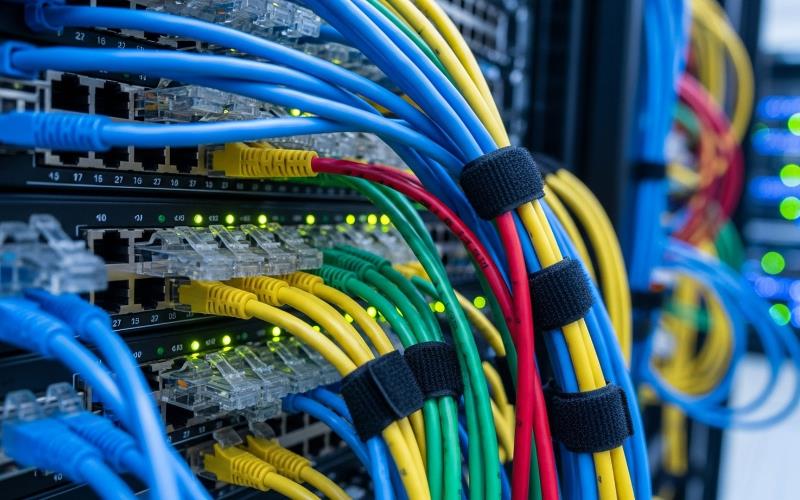
- Network switches
- Patch panels
- Servers
- Security camera recorders
- Access control equipment
- Audio and video components
- Backup power systems
The network equipment area should have sufficient space, proper ventilation, reliable electrical power and easy access for maintenance.
It should not be placed in an area exposed to excessive moisture, heat or dust. A poorly selected equipment location can create performance issues and make future service more difficult.
All cables and connections should also be clearly labelled so technicians can identify them quickly.
Include Wi-Fi Access Points in the Design
A single wireless router may not provide reliable Wi-Fi coverage throughout a large home, office, warehouse or commercial facility.
Walls, ceilings, building materials, furniture and equipment can interfere with wireless signals. For this reason, Wi-Fi access point locations should be planned before construction is completed.
Network cables can be installed to ceiling-mounted or wall-mounted access points throughout the property. This helps provide stronger coverage and reduces Wi-Fi dead zones.
Commercial properties may also require separate wireless networks for:
- Employees
- Guests
- Security systems
- Smart devices
- Building management systems
Planning these networks early can improve performance, organization and security.
Coordinate Security Camera Cabling
Security cameras are commonly included in new construction projects. Modern IP cameras often use network cabling to transmit video and receive power.
Camera locations should be selected based on the property layout and security requirements. Common locations include:
- Main entrances
- Emergency exits
- Reception areas
- Hallways
- Parking areas
- Loading zones
- Storage areas
- Outdoor spaces
Planning camera cabling during construction helps keep wires concealed and allows cameras to be positioned effectively.
The security camera system should also be coordinated with the network equipment location, recording system and internet connection.
Plan for Access Control and Intercom Systems
Commercial buildings, apartment communities and gated properties may require access control systems, intercoms or entry management technology.
These systems may include:
- Card readers
- Keypad entry
- Electronic door locks
- Video intercoms
- Gate access systems
- Mobile access controls
- Visitor management systems
Access control devices require carefully planned wiring, power and network connections. Coordinating these systems during construction can reduce delays and prevent conflicts with doors, electrical systems and interior finishes.
Blue Hawk Technologies can work with the project team to ensure that the required low-voltage infrastructure is planned before the relevant areas are completed.
Consider Audio, Video and Smart Technology
New construction network planning should also include any audio, video or automation systems that will be installed.
Residential projects may require connections for:
- Smart televisions
- Home theaters
- Distributed audio
- Lighting controls
- Climate controls
- Motorized shades
- Smart home systems
Commercial projects may require:
- Conference room displays
- Video conferencing systems
- Digital signage
- Background music
- Presentation equipment
- Building automation controls
These technologies may require network cables, speaker wires, control wires or other low-voltage connections. Planning them together helps create a cleaner and more organized installation.
Prepare for Future Technology Needs
Technology requirements can change quickly. A business may add employees, security cameras, workstations or smart devices. A homeowner may later install additional entertainment, automation or security systems.
New construction network infrastructure should therefore be designed with future growth in mind.
Future-ready planning may include:
- Additional network outlets
- Spare cable runs
- Larger network cabinets
- Extra switch ports
- Conduits for future cabling
- Pull strings inside accessible pathways
- Space for additional equipment
Installing this infrastructure during construction is generally easier than modifying finished walls and ceilings later.
For commercial projects, network cabling is only one part of a complete technology plan. Business owners should also consider wireless access points, network switches, firewalls, cloud connectivity, cybersecurity and backup systems. Learn more about The IT Infrastructure Small Businesses Need to Operate, Secure, and Grow and how these systems work together to create a reliable and scalable business environment.
Test and Document the Network
Once the network cabling has been installed, every connection should be tested to confirm that it has been properly terminated and is operating correctly.
Cables, outlets and patch panel ports should be clearly labelled. Property owners should also receive documentation showing the network layout and connection locations.
Proper testing and documentation make it easier to:
- Troubleshoot network issues
- Add new equipment
- Complete future renovations
- Identify cables and connection points
- Maintain the system efficiently
A well-organized network infrastructure is easier to manage and expand throughout the life of the property.
Plan Your Network Infrastructure with Blue Hawk Technologies
Network cabling is an important part of any modern new construction project. When the infrastructure is planned early, it can support reliable internet access, stronger Wi-Fi coverage, security systems, access control, audio and video equipment and future technology upgrades.
Blue Hawk Technologies is a network infrastructure and low-voltage technology provider serving Boca Raton and surrounding South Florida communities. We work with general contractors, developers, architects, property managers and property owners to plan and install structured cabling, network systems, security cameras, access control and connected technology solutions.
We are not a general construction contractor. Our role is to support the construction team by handling the property’s network infrastructure and low-voltage technology requirements.
Contact Blue Hawk Technologies to discuss network cabling and low-voltage planning for your upcoming residential or commercial construction project.